
This is a common theme, and at BoardClic we see it more than often. Boards spend a lot of time on operational discussions, and not enough on strategy. And one might be led to believe that the the best fix to this is simply to tighten the agenda, cut out the updates, and get the chair to hold the line.
Diving a little deeper into our own data, we find that this particular solution is not always the best one.
There are boards that highlight this problem (not enough time on strategy) more than others, and most of them have two things in common.
First, they don't quite trust the reporting they get, describing numbers that turn out wrong and forecasts that miss. Second, their management team is either brand new or still bedding in.
All of these boards are checking, double checking, and triple checking. If you're not certain the figures are right, or not yet certain about the people who produced them, going through the detail is the responsible thing to do.
It's arguably the only thing to do.
Among the the other thousands of comments in our data, another director spelled out the issue as clear as possible:
"Once we have more confidence in the operational side we'll be able to spend more time on strategy."
Of course a tight agenda and optimized framing for the sessions is a good thing. But, this goes to show that the preparation is one of the most valuable actions you can take for your board. Especially if you you are low on trust in the reporting, or are working with a new management team.
Most boards knows this, of course. They talk about deep dives, proper strategy sessions, agreeing that routine papers get read beforehand rather than read out in the room.
But when we look into our data set, the thing that most directors praise the most is simply papers turning up on time.
So if your board keeps ending up in the detail, this is the MVP of all the "first steps" you can take in order to make that shift from operational to strategic.

Ready to explore BoardClic?
Sign up to experience our free interactive demo today.

Blog
What is board business intelligence? A practical guide for boards
Blog
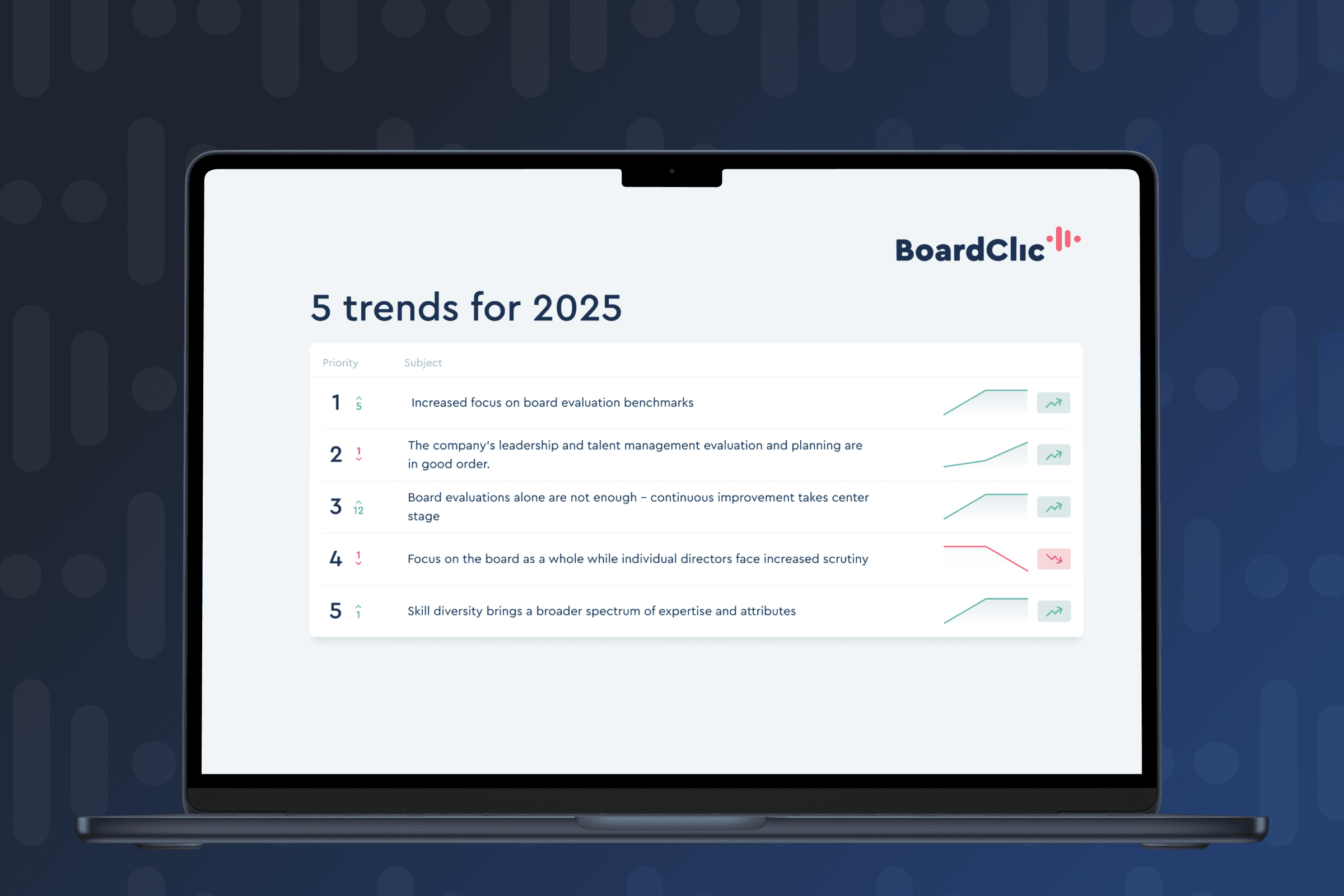
5 board governance trends reshaping what's expected of boards
Expectations on boards rarely go down. Owners, regulators and employees all want more insight into how the board works, not just what it decides. Organisations are getting more complex to oversee, and individual directors are more visible than they used to be. Here are five trends shaping board governance, and what they mean in practice.
Blog