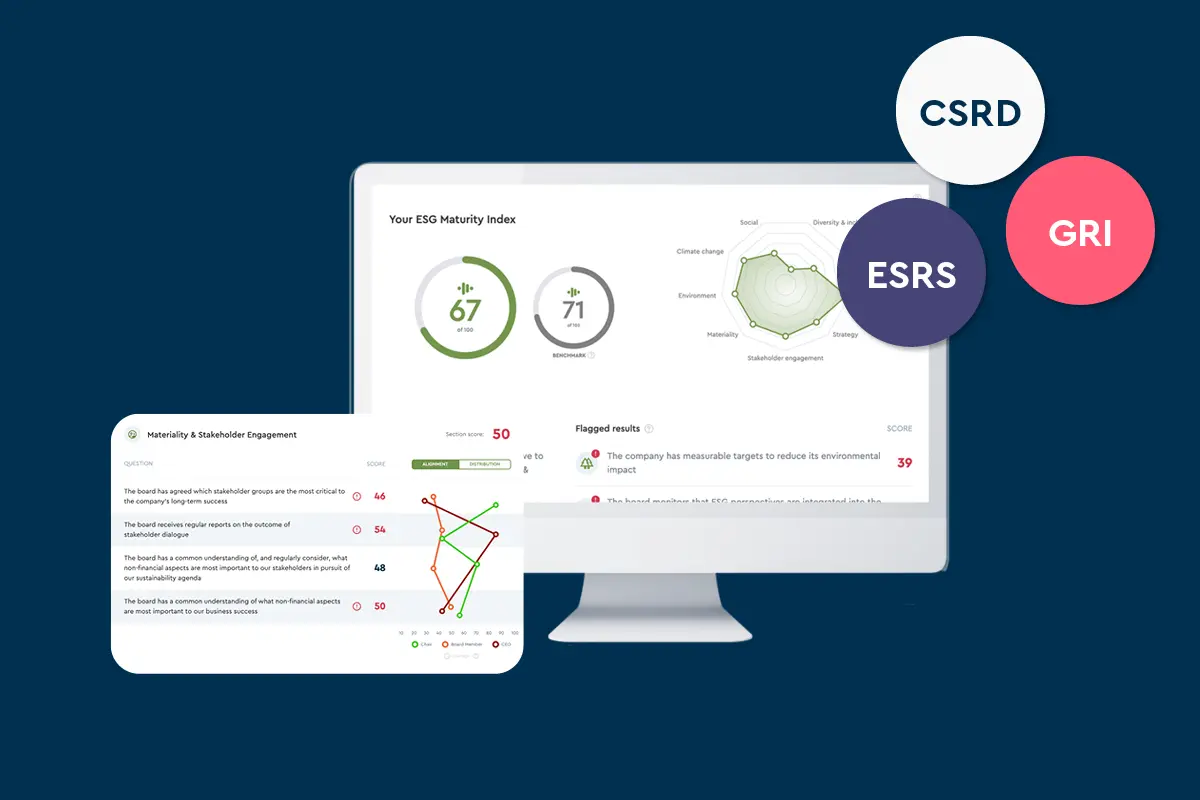
Our ESG Maturity Assessment evaluates strengths and weaknesses in six key ESG efforts to help boards and c-level executives identify opportunities for sustainable growth and business development, including:
Purpose & governance
Materiality & stakeholder engagement
Environment
Climate governance
Social, diversity & inclusion
Governance
ESG Maturity Assessment also ensures that your organisation meets the reporting requirements of major ESG standards, such as the Global Reporting Initiative (GRI), the Corporate Sustainability Reporting Directive (CSRD), and the European Sustainability Reporting Standards (ESRS).
These standards require companies to disclose information about their sustainability practices from the very highest level of governance. BoardClic’s ESG Maturity Assessment helps your organisation achieve compliance with the GRI framework’s reporting requirements, which includes evaluating the performance of your board. Additionally, it can help you meet the reporting requirements of CSRD and ESRS, which aim to standardise sustainability reporting across Europe.
Our ESG Maturity Assessment is intuitive and can be rolled out quickly without taking valuable time from board members and management. It lets you identify key ESG priorities, uncover strengths and weaknesses, and gain actionable insights. With this information, you can align towards a structured ESG strategy and steer your company in the right direction.
Read our blog “UK boards are lagging behind the rest of Europe on confidence in ESG” to learn more about European board members’ attitudes and opinions about ESG, or talk to one of our experts today to find out how BoardClic’s ESG Maturity Assessment can help you to secure your ESG ambitions.

Ready to explore BoardClic?
Sign up to experience our free interactive demo today.

Blog
What is board business intelligence? A practical guide for boards
Blog
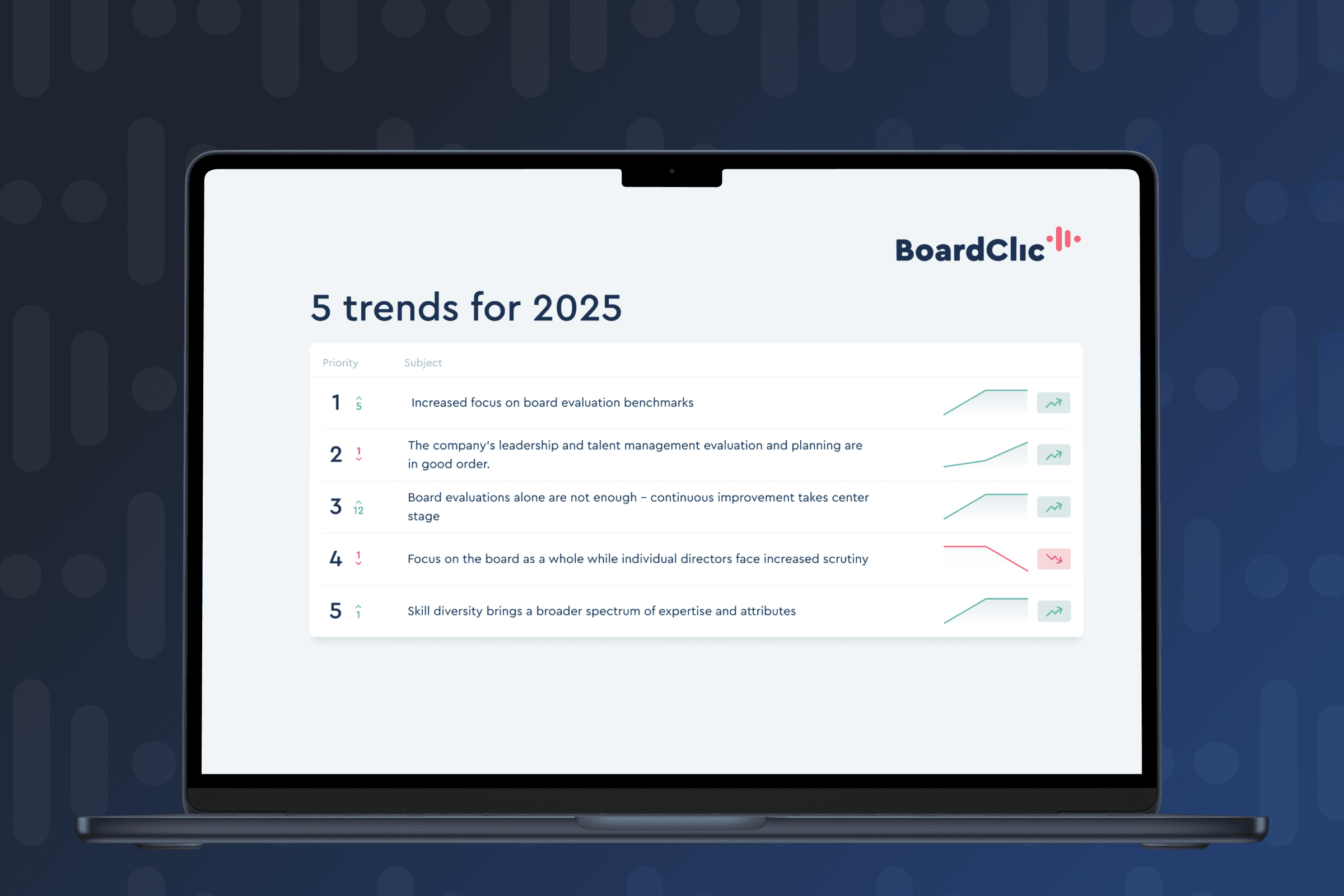
5 board governance trends reshaping what's expected of boards
Expectations on boards rarely go down. Owners, regulators and employees all want more insight into how the board works, not just what it decides. Organisations are getting more complex to oversee, and individual directors are more visible than they used to be. Here are five trends shaping board governance, and what they mean in practice.

Blog