
The TIRBR principles were developed by three leading board review practitioners in the UK in 2015 at the request of investors, as a way of encapsulating the most important elements of quality board reviews.
TIRBR’s principles are designed to ensure a high minimum standard of work so that companies, shareholders and regulators can have confidence in the integrity of the process.
The principles are deliberately designed to enshrine quality and encourage diversity of background without prescribing any specific methodology or restricting entry to the field in any way.
TIRBR’s four guiding principles for evaluators:
1 Independence
The evaluator must be able to exercise independent and objective judgement. Existing commercial relationships, and other conflicts of interest, should be avoided, and/or disclosed and managed.
2 Confidentiality
The evaluator must keep all information confidential. The only exception to this is the discovery of unlawful practices or regulatory demands.
3 Competency
The evaluator will disclose the skills and competences of each individual involved in the evaluation, and provide appropriate references. There must be alignment of expectation between the client and the evaluator with regard to quality, value and longevity of service.
4 Follow-up
The evaluator will offer to discuss progress on agreed outcomes with clients within 6-12 months.
For more information, visit tirbr.com/.
Did you know that BoardClic offers Bespoke Governance Advisory and externally facilitated board evaluations in your boardroom, complementing the digital services available on the BoardClic platform? Talk to one of our experts today to learn more!

Ready to explore BoardClic?
Sign up to experience our free interactive demo today.

Blog
What is board business intelligence? A practical guide for boards
Blog
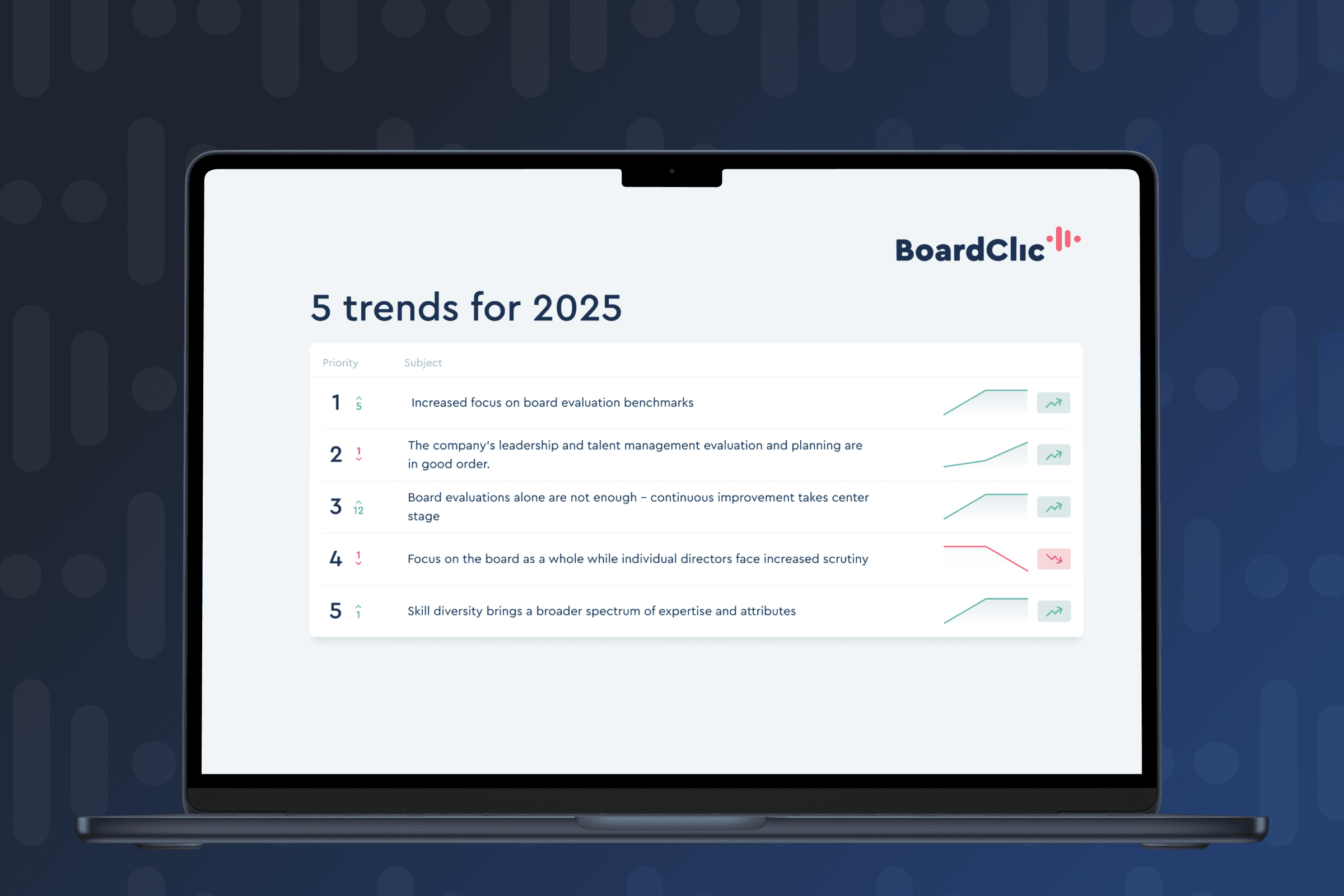
5 board governance trends reshaping what's expected of boards
Expectations on boards rarely go down. Owners, regulators and employees all want more insight into how the board works, not just what it decides. Organisations are getting more complex to oversee, and individual directors are more visible than they used to be. Here are five trends shaping board governance, and what they mean in practice.

Blog